Giving My Uplift Desk the Wood It Deserved
My Uplift standing desk spent years wearing a cheap IKEA top. Here is why I upgraded to solid black walnut, how the swap went, and what I learned.
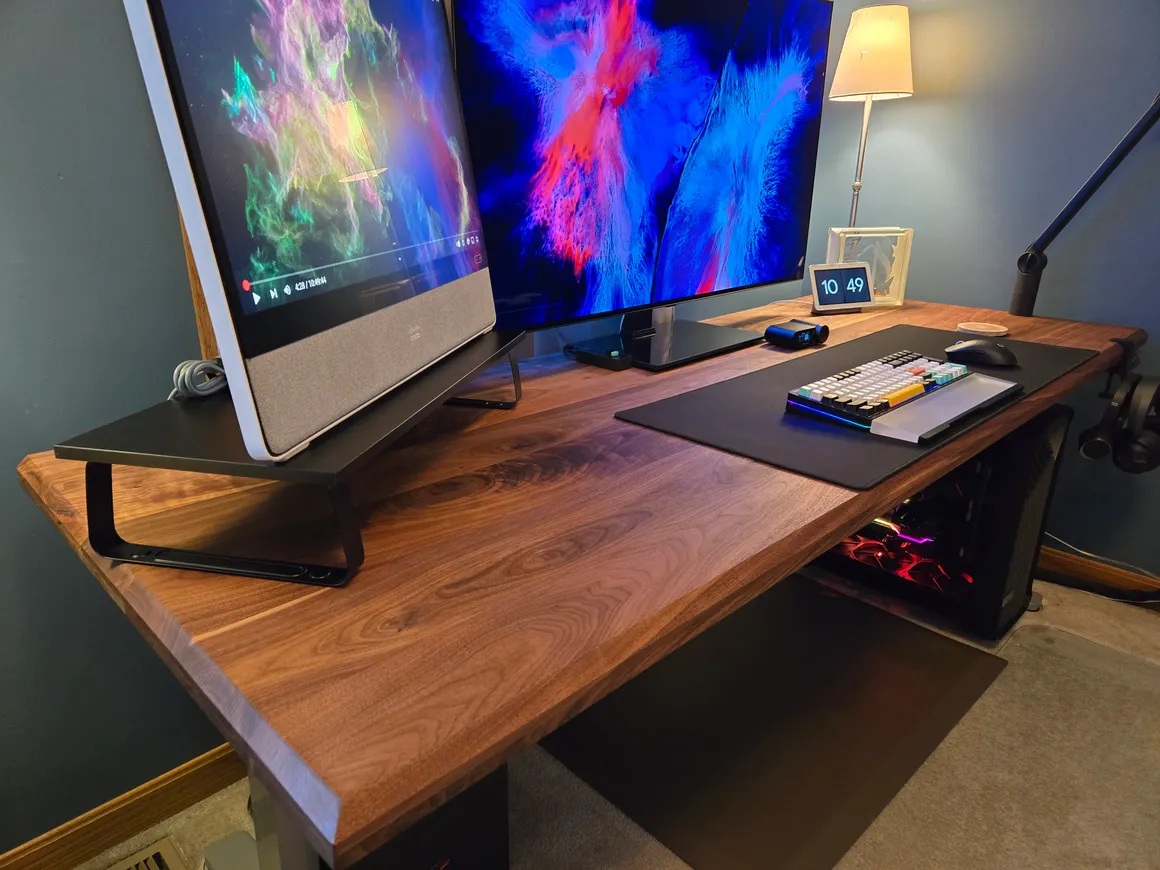
My desk has been a study in mismatched priorities for years: a genuinely nice Uplift sit-stand base on the bottom, and a cheap IKEA top riding on it. It’s like putting economy tires on a sports car.
The base was never the problem. Uplift frames are dual-motor, stable, and basically indestructible. The top, on the other hand, was the kind of particleboard slab IKEA sells for less than a pizza night, and it looked and felt exactly like that.
This month I finally fixed the half of the desk that was letting the team down. The IKEA top is gone, and a solid black walnut top is in its place.
#The nice thing about a standing desk: the top is a consumable
This is the underrated part of buying a quality sit-stand frame. The expensive, complicated half of the desk, the motors, the legs, the controller, is a separate purchase from the slab on top. When the top starts to embarrass you, you don’t replace the desk. You unbolt one and bolt on another.
My IKEA top had earned retirement. The edge banding was peeling, there was a permanent soft spot where I lean my forearms, and years of monitor arms and clamp mounts had chewed up the underside. Particleboard doesn’t age, it decomposes on a schedule.
So the frame stayed. Only the top changed. That also made this a much easier purchase to justify, because I wasn’t shopping for a desk, just a board. A very nice board.
#Why black walnut and not another slab of whatever
Once I decided to buy a real top, I looked at the usual suspects: big box butcher block, bamboo, another laminate slab in a nicer costume. Then I looked at black walnut and stopped looking at anything else.
Black walnut has this deep chocolate color with grain that shifts between brown, purple, and almost black depending on the light. No two boards look alike, and the grain is the first thing people comment on when they see the setup.
It’s also a hard, stable wood that suits a desk. It doesn’t dent if you look at it wrong the way pine does, and an oil finish can be refreshed with a rag on a Saturday instead of a full refinishing project. If I scratch it, I sand it and re-oil it. This top should outlive every monitor that ever sits on it.
The look matters too. All my hardware is black: the Uplift frame, the peripherals, the monitor arms. The old white IKEA top made the whole thing look like a temporary workstation at a help desk. The walnut warms it up into something that looks like a place a person actually chose to work.
#The swap: one nervous hour with a drill
The mechanics of the swap are simple. Flip the desk, unbolt the frame from the old top, position it on the new top, drive the screws. The Uplift frame has slotted brackets, so it accommodated the new top’s dimensions without drama.
The stressful part is driving screws up into a walnut top you just spent real money on. Two things saved me here. Pilot holes for everything, because hardwood this dense will snap a screw before it lets you skip that step. And tape on the drill bit as a depth stop, because blowing through the surface of the new top would have been a very expensive way to end the afternoon.
Fair warning if you do this: solid walnut is heavy. The IKEA top comes off like a piece of cardboard, and then the walnut top politely requests a second person. Trying to flip a mounted desk with a hardwood slab solo is how you ding a corner and your back in the same motion.
While the desk was on its back anyway, I redid the cable management properly: a wire tray under the top for the power strip and bricks so everything rides up and down with the desk, one sleeved run down a leg, velcro for the rest. A top this nice makes cable spaghetti look ten times worse, so this was the moment to deal with it.
#The verdict: same desk, entirely different desk
Functionally nothing changed. It’s the same base, the same height presets, the same monitors. And yet it’s a completely different desk to sit at.
The surface feels solid under your hands in a way particleboard never did. Nothing flexes when I lean on it, the clamp mounts bite into real wood instead of compressed dust, and I catch myself just looking at the grain when I should be working.
Takeaways if your nice frame is also wearing a cheap hat:
- The top and the frame are separate decisions. A good frame deserves a second, better top eventually.
- Buy the top for the next decade. Solid hardwood costs more up front and then never asks for anything again.
- Pilot holes and a depth stop. The walnut will not forgive improvisation.
Next up for this office: the network deserves the same treatment the desk got. But that’s another post.